In short
- Ireland protects 0 mushroom species in national law. Its Flora (Protection) Order 2022 lists one lichen and no other fungi.
- Ireland has published 16 Red Lists of threatened species since 1988, from bees to sharks. None covers fungi, and a Red List of Irish lichens has not been completed.
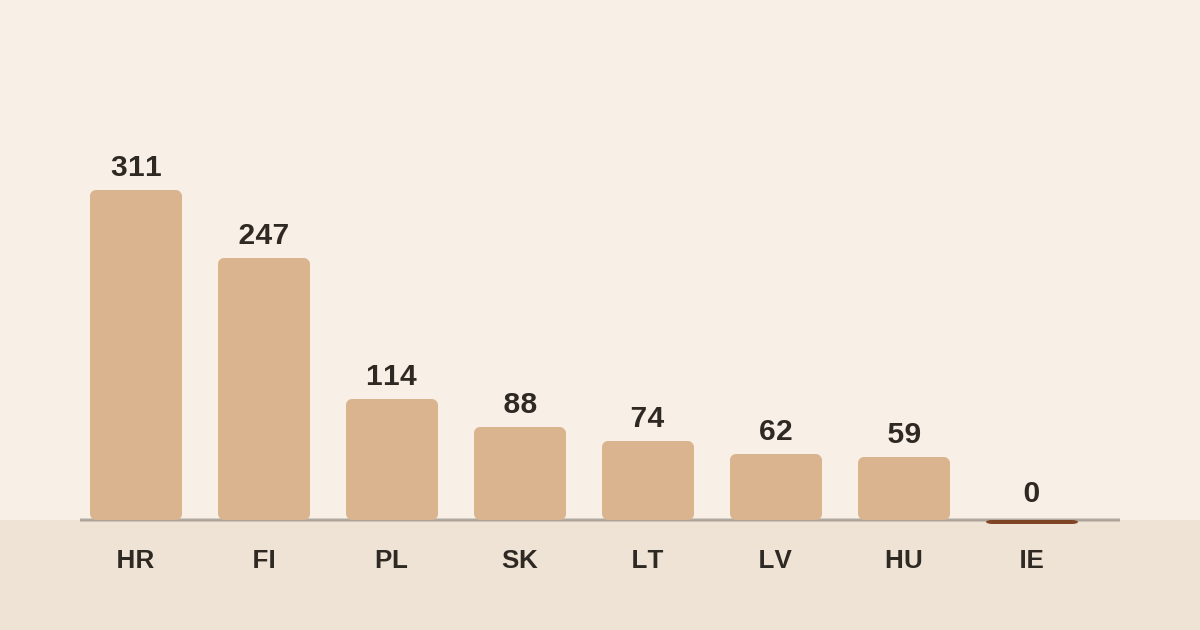
- 15 EU countries protect mushroom species by law. Croatia protects 311, Finland 247, Poland 114 and Slovakia 88. Ireland is one of 12 that protect none nationally, according to the first EU-wide audit, published in August 2026.
- That's not for lack of species: the National Biodiversity Data Centre's main fungal dataset holds records of 2,248 species in Ireland.
What Irish law protects
In Ireland, wild plants are protected by listing them in a Flora (Protection) Order made under section 21 of the Wildlife Act 1976. The current order, from 2022, replaced orders made in 1980, 1987, 1999 and 2015. It lists vascular plants, mosses and liverworts, stoneworts and one lichen. It lists no mushrooms or other non-lichenized fungi.
That's the finding of the first EU-wide audit of protected fungi, by Daniel Janowski of the Polish Academy of Sciences' Institute of Dendrology, published in the journal IMA Fungus on 24 August 2026. Its country table records Ireland as protecting 0 non-lichenized fungal taxa and 1 lichen, the lichen listed under plant law.
How other EU countries compare
| Country | Mushrooms and other fungi | Lichens |
|---|---|---|
| Croatia | 311 | 35 |
| Finland | 247 | 472 |
| Poland | 114 | 199 |
| Slovakia | 88 | 44 |
| Lithuania | 74 | 44 |
| Latvia | 62 | 60 |
| Hungary | 59 | 18 |
| Luxembourg | 55 | 117 |
| Czechia | 46 | 0 |
| Estonia | 46 | 51 |
| Slovenia | 41 | 1 |
| Germany | 18 | 8 |
| Bulgaria | 10 | 0 |
| Sweden | 5 | 8 |
| Malta | 3 | 2 |
| Ireland | 0 | 1 |
| Cyprus | 0 | 1 |
| Romania | 0 | 1 |
The audit found that 15 of the 27 EU countries protect non-lichenized fungi, with 884 different taxa protected somewhere in the EU. Croatia, Finland and Poland account for 88% of them. France, Italy, Spain and Austria leave fungal protection to their regions, so none protects a mushroom nationwide. The only fungus protected at EU level is a group of reindeer lichens, under the Habitats Directive.
A long list is not the same as good protection, and the audit is careful about that: most protected species are protected in only one country, and the lists lean towards large, familiar mushrooms rather than the many small and inconspicuous ones. But Ireland's list is empty.
No Irish Red List for fungi
Red Lists don't give legal protection, but they are how a country records which species are under threat, and they guide what gets protected. Ireland's National Parks and Wildlife Service lists 16 Red List publications, from the Irish Red Data Book of vascular plants in 1988 to the latest bryophyte list in 2025. They cover water beetles, molluscs, mammals, butterflies, fish, amphibians and reptiles, dragonflies, mayflies, mosses, moths, plants, sharks and rays, stoneflies and bees.
None covers fungi. NPWS's 2019 checklist of protected and threatened species also notes that "a Red List assessment of the Irish lichen species has not been completed".
What has been recorded
The species are there to assess. The National Biodiversity Data Centre's dataset "Fungal Records for Ireland", supplied by the British Mycological Society, holds 14,240 records of 2,248 species, collected between 1800 and 2008. It is one of several fungal datasets the centre holds, so the true number of species recorded in Ireland is higher.
Record counts measure how much recording has been done, not how common or rare a species is.
Related data
Method and caveats
- EU figures are from Table 1 of Janowski (2026), which counts taxa on each country's national legal protection list ("corrected no. of listed taxa"). Where a country has more than one protection list we add them; Croatia's separate ordinance on collecting wild species is about harvesting, not protection, so it is not counted.
- National law only. Regional lists, protected habitats and site designations can protect fungi without naming them. This page counts named species in national law.
- Republic of Ireland only. Northern Ireland has its own wildlife law and is not covered here.
- Red Lists are as listed on npws.ie on 20 November 2026.
- This page is about legal protection and conservation records. It gives no identification or foraging advice.
Sources
- Janowski D (2026). The legally protected fungi and lichens in the EU. IMA Fungus 17: e202399. Published 24 August 2026. https://doi.org/10.3897/imafungus.17.202399 (accessed 20 November 2026)
- Janowski D (2026), Table 1 data (CSV). https://imafungus.pensoft.net/article/202399/download/csv/21/ (downloaded 20 November 2026)
- S.I. No. 235/2022, Flora (Protection) Order 2022. https://www.irishstatutebook.ie/eli/2022/si/235 (accessed 20 November 2026)
- National Parks and Wildlife Service, Flora (Protection) Order 2022. https://www.npws.ie/node/5383 (accessed 20 November 2026)
- National Parks and Wildlife Service, Red Lists. https://npws.ie/publications/red-lists (accessed 20 November 2026)
- Nelson B et al. (2019). Checklists of protected and threatened species in Ireland. Irish Wildlife Manuals No. 116. NPWS. npws.ie (accessed 20 November 2026)
- National Biodiversity Data Centre, Fungal Records for Ireland (dataset 77), last updated 13 June 2025. https://maps.biodiversityireland.ie/Dataset/77 (accessed 20 November 2026)
- Scienmag / Bioengineer.org, "Fungi fall through legal cracks across the EU", 16 October 2026. https://bioengineer.org/fungi-fall-through-legal-cracks-across-the-eu-first-pan-european-audit-reveals/ (accessed 20 November 2026)
The data is free to reuse under CC BY 4.0 with credit to FungiStats and a link to this page. Download the CSV.